
Bail Applications in the Bombay High Court
From anticipatory bail to post-conviction suspension — strategy, framework, and what actually moves the bench
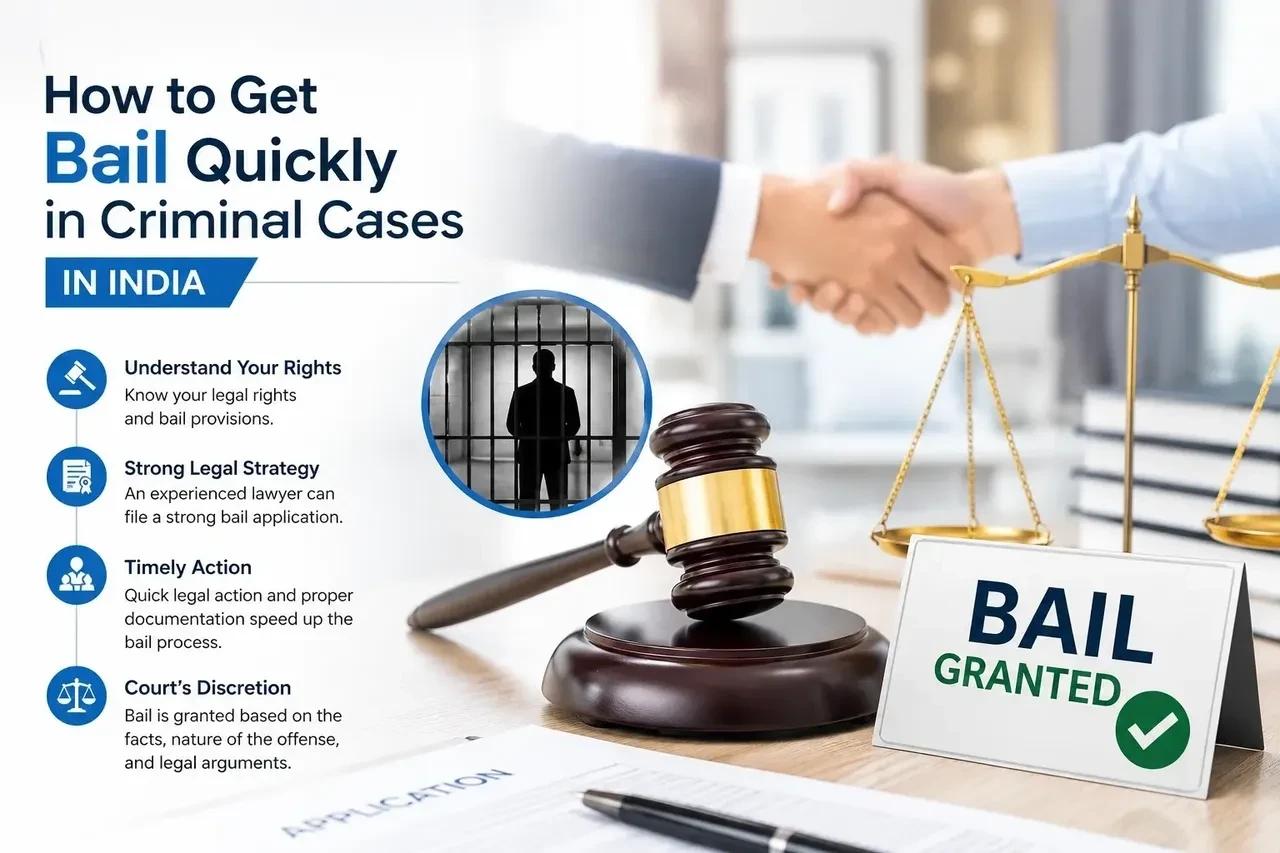
Personal liberty is the most fundamental right a citizen holds, and no proceeding tests it more acutely than a bail application. When a Sessions Court declines bail or when the stakes are too high to risk a first hearing below, the Bombay High Court becomes the critical forum.
In practice, bail hearings are won and lost not on the facts alone, but on how those facts are marshalled before the bench. This piece sets out the legal framework, the practical architecture of an application, and the factors that actually move the court.
The Statutory Foundation
The Bharatiya Nagarik Suraksha Sanhita, 2023 (BNSS) now governs bail, replacing the CrPC provisions that practitioners followed for decades. The core structure is preserved — bailable and non-bailable offences, regular bail, anticipatory bail, and interim bail — but with modifications in timelines and conditions.
The accused has a right to bail; the police officer or court has no discretion to refuse.
The court exercises discretion, guided by statutory parameters and judicial precedent.
A right crystallises after prolonged incarceration without conviction within specified periods.
The High Court or Sessions Court may grant bail in anticipation of arrest, with conditions as it deems fit.
These carry twin-test requirements, inverted presumptions, or outright restrictions that demand a separate tactical approach.
Regular Bail vs. Anticipatory Bail: Choosing the Right Route
The choice between the two is strategic, not merely semantic. Regular bail applies once the person has been arrested. Anticipatory bail under Section 484 BNSS is sought before arrest — it is a pre-emptive shield and must be applied for before the police move to arrest.
At the High Court level, anticipatory bail applications come either directly (where the gravity of offences warrants bypassing the Sessions Court, or where the Sessions Court has refused) or by way of challenge to a Sessions Court order. In high-stakes matters — economic offences, politically charged FIRs, serious financial fraud — a direct application to the High Court, supported by a strong factual affidavit and sound legal submissions, is often the stronger play.
How the Bombay High Court Evaluates a Bail Application
The Supreme Court has settled, through decades of precedent, the primary considerations a court must weigh. The Bombay High Court consistently applies this framework. In practice, the bench will examine:
- ▸The nature and gravity of the accusation and the punishment prescribed
- ▸The antecedents of the accused — prior convictions, pending cases, the accused's standing in the community
- ▸The likelihood of the accused fleeing justice or leaving the jurisdiction
- ▸The risk of the accused tampering with witnesses or evidence if released
- ▸The stage of investigation or trial — the strength of the prosecution's case at that point
- ▸Long incarceration without trial completion, particularly where the chargesheet has been filed
- ▸Health, age, and personal circumstances of the accused, including dependants
Critically, the court at the bail stage does not conduct a mini-trial. It evaluates prima facie material against these parameters. A well-drafted application does the court's work for it by presenting this matrix cleanly.
Architecture of a Strong Application
Factual Affidavit
Precise, chronological narrative of facts. No exaggeration — courts notice inflation and it damages credibility.
Legal Groundwork
Establish jurisdiction, the applicable provision, and why the standard for bail is met — squarely, not obliquely.
Attacking the FIR / Chargesheet
Surface inconsistencies, omissions, absence of independent evidence, and overreach in the offences alleged.
Custodial Necessity Rebuttal
Demonstrate that continued custody serves no investigative or preventive purpose — the classic grounds for release.
Condition Proposals
Pre-empt the court's concerns with well-designed bail conditions: surety amounts, surrender of travel documents, reporting requirements.
Case Law Bundle
Curated Supreme Court and Bombay High Court decisions directly on the applicable provisions and offences — not a general dump.
The Hearing: What Happens in Court
The Bombay High Court's criminal bench hears bail applications on designated days. In urgent matters — fresh arrests, imminent remand hearings — mention applications are made for an out-of-turn listing. Once listed, the sequence is typically: brief submissions by the applicant's counsel, response by the APP (Additional Public Prosecutor) or special counsel for the state, and if a private complainant has engaged counsel, a third set of submissions.
Oral advocacy here is the difference. Judges who have read the application before the hearing will probe specific weaknesses in the case. The ability to answer a bench query with precision — citing the record, the precedent, or the statutory provision — matters enormously.
Cancellation of Bail — The Other Side
The High Court also hears applications for cancellation of bail granted by subordinate courts. A complainant or the state may approach the High Court when the accused violates bail conditions, threatens witnesses, absconds, or where the Sessions Court granted bail on a manifestly flawed reading of the law. The standard for cancellation is higher than for refusal — the Supreme Court has held that new supervening circumstances are ordinarily required.
For the accused, meticulous compliance with every bail condition is non-negotiable. A bail condition is not a suggestion; it is a court order. Non-compliance can end bail and substantially prejudice the underlying case.
Special Categories Requiring Tailored Strategy
Several categories of offences demand a fundamentally different approach and should not be treated as routine bail matters:
Practitioner's Checklist Before Filing
- 1Confirm the correct provision — BNSS or applicable special statute
- 2Ascertain whether a Sessions Court application is mandatory first, or whether the High Court has direct jurisdiction
- 3Obtain all FIR, remand orders, and custody papers before drafting the affidavit
- 4Review the chargesheet (if filed) for inconsistencies; build your case around the record, not assumptions
- 5Check for any existing bail conditions from a lower court that need to be addressed or modified
- 6Identify the assigned bench and its recent pronouncements on the relevant offence category
- 7Brief a surety in advance so execution of bond is immediate upon grant
When Bail Is Refused
A refusal by the Bombay High Court does not end the matter. If the order is on merits and no fresh grounds exist, a renewed application on changed circumstances remains available. If the order is on law, the Supreme Court under Article 136 is the next forum.
In practice, however, a well-argued first application before the High Court is far more likely to succeed than an appeal carried upward — both because the factual record is best developed at this stage, and because the Supreme Court's bail jurisdiction is typically exercised only where the High Court has demonstrably erred. The investment in a rigorous, well-prepared first application is the most important decision in a criminal matter.
AEQUITAS LEGIS ASSOCIATES | Advocates & Solicitors | Pune | Mumbai | Delhi
This article is prepared for general informational purposes only and does not constitute legal advice or a legal opinion on any specific matter. Readers should seek independent advice from qualified counsel before acting on any of the matters discussed.