
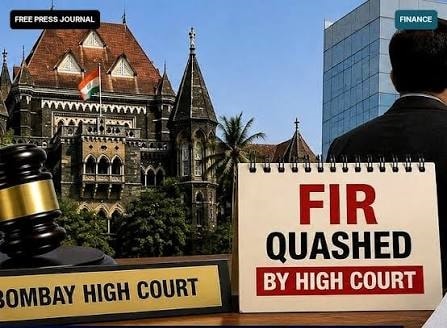
Quashing of FIR in the High Court: Section 528 BNSS, Grounds, Procedure and Recent Supreme Court Rulings
A practitioner's guide updated September 2026
An FIR is only the first step in a criminal case, but the person named in it feels the consequences at once: police notices, the prospect of arrest, and difficult questions from employers, banks and family. Most FIRs have to run their course through investigation and trial. Some should never have been registered at all. The facts they describe may not be a crime, a business or family quarrel may have been given a criminal label, or the complaint may have been lodged to settle a score. For these cases the law offers an early exit: a petition asking the High Court to quash the FIR and everything built on it.
What Quashing an FIR Means
Quashing ends a prosecution at its root. Once the High Court quashes an FIR, the law treats it as though it had never existed, and every criminal proceeding founded on it comes to an end automatically. That includes the investigation, the charge-sheet, any summons and the trial. Relief can also be partial — the Court may quash the case against some accused and let it continue against others, or quash some offences while the rest proceed.
Quashing is different from discharge or acquittal, which the trial court decides after the charge-sheet or at the end of trial. Only the High Court can quash an FIR. A trial court cannot, though it can discharge an accused at a later stage, which is a separate remedy.
Section 528 BNSS: Where the Power Sits Now
When the BNSS replaced the Code of Criminal Procedure on 1 July 2024, the High Court's inherent power moved from Section 482 CrPC to Section 528 BNSS. The wording of the two provisions is identical, so decades of Supreme Court precedent under Section 482 continue to apply.
Section 528 does not create the power. It declares that nothing in the Sanhita limits the High Court's inherent authority to make orders for three purposes: to give effect to an order under the Sanhita, to prevent abuse of the process of any court, or otherwise to secure the ends of justice. Quashing rests on the second and third. The High Court also has writ jurisdiction under Article 226 and supervisory jurisdiction under Article 227, and most petitions invoke these alongside Section 528.
Two practical traps to avoid
Section 482 now means anticipatory bail
In the BNSS, Section 482 is the anticipatory bail provision. A quashing petition must be framed under Section 528, not Section 482.
FIRs registered before 1 July 2024
The savings clause in Section 531 BNSS keeps pending investigations under the old Code. Where the FIR predates the BNSS, invoke Section 528 BNSS and Section 482 CrPC in the alternative. The two provisions are identical, so nothing of substance turns on the label.
Is It Ever Too Early, or Too Late, to File?
A petition can be filed at any stage: soon after the FIR is registered, after the charge-sheet, or even after charges have been framed. The Supreme Court has rejected the idea that an early stage of investigation is by itself a reason to refuse relief. At the other end, Anand Kumar Mohatta v. State (NCT of Delhi) (2019) confirms that filing a charge-sheet does not take away the power.
What changes with the stage is the form of the challenge. Before a court takes cognizance, an FIR or charge-sheet can be quashed under Article 226. Once a judicial order taking cognizance has been passed, Article 226 is no longer available, but Section 528 BNSS is. Under Section 528 the High Court can quash the FIR, the charge-sheet and the cognizance order itself, provided the order is placed on record with proper pleadings and a strong case is made out.
The Grounds on Which High Courts Quash FIRs
The starting point remains State of Haryana v. Bhajan Lal (1992), which identified seven illustrative situations in which proceedings may be quashed:
- 1The allegations, even if accepted in full, make out no offence.
- 2The allegations disclose no cognizable offence that could justify a police investigation without a Magistrate's order.
- 3The allegations and the evidence collected do not disclose any offence.
- 4The allegations disclose only a non-cognizable offence, and the police investigated without a Magistrate's order.
- 5The allegations are so absurd or inherently improbable that no prudent person could find ground to proceed.
- 6A statute expressly bars the proceeding or provides its own effective remedy.
- 7The proceeding is manifestly mala fide or was instituted to wreak vengeance.
The Court was equally clear that the power must be used sparingly. At this stage the High Court does not weigh the reliability or sufficiency of the evidence. It asks only whether, accepting the FIR as true, any offence is made out.
Six grounds most commonly relied upon in practice
The FIR does not disclose an offence
The Court reads the FIR as if every word were true and checks it against the ingredients of each offence alleged. Cheating is the classic example. The complainant must show in the FIR that the accused had a fraudulent or dishonest intention when the promise or representation was made. That intention cannot be presumed merely because the promise was later broken. In a May 2026 ruling, the Supreme Court noted that criminal intimidation under Section 351 BNS needs specific threats and hurt under Section 115 BNS needs material showing bodily pain. Bald assertions without particulars cannot sustain a prosecution.
A civil dispute has been given a criminal colour
Unpaid invoices, failed development agreements, partnership fallouts and title disputes are often turned into FIRs for cheating, criminal breach of trust or forgery, usually to pressure the other side. Where the grievance is essentially contractual, the remedy is civil. The Supreme Court has also stressed that cheating and criminal breach of trust cannot ordinarily both be made out on one set of facts. Cheating requires dishonest intention from the start, while criminal breach of trust presupposes a lawful entrustment that is later dishonestly misappropriated.
Vague, omnibus allegations against family members
FIRs alleging cruelty under Sections 85 and 86 BNS often name the husband's parents, his siblings, and relatives living elsewhere, without attributing any specific act to them. High Courts quash proceedings against such relatives where the allegations are general and unsupported. Specific allegations against others are left to be tried.
The complaint is driven by malice
Where the petitioner says the FIR is vindictive, the Court does not stop at the complaint's wording. The Supreme Court has observed that a complainant set on personal vengeance will make sure the FIR is carefully drafted to show every ingredient of the offence. The Court therefore has to examine such an FIR with care and more closely than usual (Mohammad Wajid v. State of U.P., 2023). Where the accused relies on material of his own, the four-step test in Rajiv Thapar v. Madan Lal Kapoor (2013) applies: the material must be sound and of unimpeachable quality; it must be enough to reject the factual assertions in the complaint; the prosecution must be unable to justifiably refute it; and continuing the case must amount to an abuse of process.
A statutory bar
Some prosecutions fail because a legal precondition was not met. Two common ones are sanction to prosecute a public servant (Section 218 BNSS) and a written complaint by the public servant concerned for offences such as obstruction (Section 215 BNSS). Cognizance taken without the precondition cannot stand.
A genuine settlement of a private dispute
The High Court's power under Section 528 is wider than compounding. It can quash even non-compoundable offences where the dispute is genuinely private and continuing the case would be an abuse of process. The governing authorities are Gian Singh v. State of Punjab (2012), Narinder Singh v. State of Punjab (2014), Parbatbhai Aahir v. State of Gujarat (2017) and State of M.P. v. Laxmi Narayan (2019). Private disputes — commercial, financial, matrimonial, family and partnership quarrels — can be quashed on settlement. Serious offences against society, including murder, rape, dacoity and offences under special statutes, cannot be compromised away.
When the High Court Will Not Step In
No mini-trial
The High Court will not weigh the defence's evidence against the prosecution's (CBI v. Aryan Singh, 2023). Where the FIR discloses an offence and the dispute is about facts, the trial is the forum.
No settlement of offences against society
The Court will also be wary of any settlement that looks coerced or bought.
Slow to interfere with investigation
In Neeharika Infrastructure v. State of Maharashtra (2021), the Supreme Court cautioned that staying an investigation is the exception. It should be granted only on a strong prima facie case, not as a matter of course. Any interim order of no coercive steps must give reasons.
Suppression
A petitioner who hides earlier proceedings or material facts risks losing on that ground alone.
Filing a Quashing Petition in the Bombay High Court
Which Bench
- FIRs from Mumbai, Thane and Pune go to the principal seat at Mumbai.
- The Nagpur and Aurangabad (Chhatrapati Sambhajinagar) benches hear matters from their regions.
- The Goa bench sits at Panaji.
- Since 18 August 2025, the Kolhapur circuit bench hears matters from Satara, Sangli, Solapur, Kolhapur, Ratnagiri and Sindhudurg districts.
Quashing is sought either through a Criminal Writ Petition under Articles 226 and 227 read with Section 528 BNSS, or through a Criminal Application under Section 528. Given Pradnya Kulkarni (2025), Section 528 should be invoked in every petition. If a charge-sheet is filed while the petition is pending, the petition should be amended to bring the charge-sheet and cognizance order on record.
What the Petition Should Contain
- 1A synopsis and list of dates.
- 2The FIR and the original complaint.
- 3Documents showing why no offence is made out: agreements, correspondence, bank records, civil suit or arbitration papers, and earlier complaints between the parties.
- 4The charge-sheet and cognizance order, if they already exist.
- 5Grounds that take each offence invoked, set out its ingredients, and show where the FIR falls short.
- 6Full disclosure of earlier proceedings, including any previous quashing or bail applications.
Parties
Both the State, through the Public Prosecutor, and the complainant must be made respondents. Leaving out the complainant is a frequent defect and can lead to dismissal for non-joinder.
First hearing and interim protection
The Court usually issues notice at the first hearing. The APP takes instructions from the investigating officer, and the Court may call for the investigation papers. Interim protection can be sought, but after Neeharika it is not automatic. Where arrest is a real risk, anticipatory bail under Section 482 BNSS is often pursued in parallel.
Settlement-based petitions
The Court must be satisfied that the compromise is voluntary. That usually requires a signed settlement deed or consent terms, the complainant's affidavit and, in most cases, the complainant's appearance in person or by video link.
If the petition is dismissed
The next step is a Special Leave Petition to the Supreme Court under Article 136. Alternatively, once the charge-sheet is filed, the accused can seek discharge before the trial court under Section 250 or Section 262 BNSS.
Recent Supreme Court Rulings on Quashing (2024–2026)
The principles above are long settled. What has changed is how firmly the Supreme Court now expects High Courts to apply them.
When and How to Challenge
Imran Pratapgadhi v. State of Gujarat (2025 INSC 410, 28 March 2025)
The Gujarat High Court had refused to quash an FIR over a poem in a social-media post because the investigation was at a very nascent stage. The Supreme Court quashed the FIR, holding that no offence was made out. The Court also held that where the allegation concerns speech-related offences punishable with three to seven years, it is always appropriate for the police to hold a preliminary inquiry under Section 173(3) BNSS before proceeding.
Pradnya Pranjal Kulkarni v. State of Maharashtra (September 2025)
A writ petition challenged an FIR registered at MIDC Police Station, Solapur, for cheating and criminal breach of trust. While it was pending, the police filed a charge-sheet. A Division Bench of the Bombay High Court disposed of the petition as infructuous. The Supreme Court set that order aside and laid down the framework on Article 226 before cognizance and Section 528 after it. For practitioners in Maharashtra, this is now a key procedural ruling.
Civil Disputes and the Offence of Cheating
Manish v. State of Maharashtra (2025 INSC 430, 2 April 2025)
The appeal arose from the Nagpur bench's refusal to quash a cheating FIR. Coal had been supplied on credit and dues built up. A notarised repayment agreement was only partly honoured before the complainant went to the police. The Supreme Court quashed the proceedings, holding that dishonest intent must be shown at the very start of the transaction, and a breach of agreement or failure to repay does not by itself prove deception.
Shailesh Kumar Singh v. State of U.P. (2025 INSC 869)
While hearing a plea to quash a cheating FIR over a civil dispute, the Allahabad High Court had ordered the accused to pay Rs. 25 lakh to the complainant and then go to mediation. The Supreme Court disapproved and reminded High Courts that money owed in a civil dispute cannot be recovered by lodging an FIR and enlisting the police, and that doing so is itself an abuse of process.
V. Ganesan v. State (2026 INSC 265, 19 March 2026)
A breach of contract or unkept promise is not cheating unless dishonest intention existed at the inception. Dishonoured post-dated cheques do not by themselves establish that intention. The Court quashed the cheating proceedings as a purely civil dispute.
Bhikhubhai Govindbhai Patel v. State of Gujarat (2026 INSC 532, 22 May 2026)
The Court quashed an FIR arising out of a civil property dispute and held that a later FIR with improved allegations of extortion was an abuse of process. It also held that a property claim that ultimately fails does not mean the claimant created a false document, and criminal antecedents cannot be the sole or primary ground for refusing to quash.
G. Saminathan v. The State (2026 LiveLaw (SC) 757)
The dispute concerned a failed joint development agreement under which the developer had paid a refundable Rs. 3 crore deposit. The parties had already arbitrated, and the award was under challenge under Section 34 of the Arbitration Act. The Court held the dispute to be civil and quashed the FIR, the charge-sheet and all consequential proceedings.
Matrimonial and Vindictive Complaints
Dara Lakshmi Narayana v. State of Telangana (2024 INSC 953, 10 December 2024)
The Court quashed a Section 498A and Dowry Prohibition Act case against a husband and his family. It found the allegations vague and omnibus, and the FIR a retaliatory step after the husband sought divorce. Naming relatives without specific allegations was an abuse of process, and the FIR, charge-sheet and trial were all quashed.
Pradeep Kumar Kesarwani v. State of U.P. (2 September 2025)
The Court quashed summons on a complaint alleging sexual relations on a false promise of marriage. The complaint lacked essential particulars, was filed after an unexplained four-year delay, and roped in the man's parents. The Court faulted the High Court for not using its inherent power to stop the misuse of process.
Procedural Bars
B.N. John v. State of U.P. (2025 INSC 4, 2 January 2025)
Cognizance of offences of obstructing and using criminal force against public servants had been taken on a police charge-sheet, without the written complaint by a public servant that the law requires. The Supreme Court held that cognizance had not been taken by due process and quashed the proceedings.
Settlement in Serious Offences
Ramji Lal Bairwa v. State of Rajasthan (2024 SCC OnLine SC 3193, 7 November 2024)
The Rajasthan High Court had quashed a case of sexual harassment of a 15-year-old student on the basis of a compromise between the accused teacher and the girl's father. The Supreme Court set that order aside and treated the allegations as offences against society rather than a private matter.
Madhukar v. State of Maharashtra (July 2025)
These appeals came from the Aurangabad bench, which had refused to quash two FIRs — one alleging assault and the other rape — despite an amicable resolution. The complainant had filed an affidavit saying she no longer wished to pursue the case and had since married. The Supreme Court quashed the proceedings, stressing that this was a narrow exception in exceptional circumstances, not a general licence to quash rape cases on settlement.
Frequently Asked Questions
Can an FIR be quashed after the charge-sheet is filed?
Yes. Filing the charge-sheet does not end the High Court's power. After cognizance, however, the petition must invoke Section 528 BNSS and specifically challenge the charge-sheet and the cognizance order (Pradnya Kulkarni, 2025).
Can a Magistrate or Sessions Court quash an FIR?
No. Only the High Court, and the Supreme Court in appeal, can quash an FIR. The trial court can discharge an accused once the charge-sheet is before it.
Is there a time limit for filing a quashing petition?
No limitation period is prescribed. Unexplained delay can still weigh against the petitioner, and filing early allows the petition to be decided before the investigation hardens into a charge-sheet.
Will I be protected from arrest while the petition is pending?
Not automatically. Interim protection is discretionary and, after Neeharika, must be justified on the record. Where arrest is a real risk, anticipatory bail under Section 482 BNSS is usually sought alongside the petition.
The Bottom Line
A quashing petition is won or lost on the FIR's own text and the documents placed alongside it. The strongest petitions do three things:
- They show, offence by offence, which ingredient is missing.
- They rely on undisputed material rather than asking the Court to believe the accused's version.
- They use the right procedural route for the stage the case has reached.
Recent Supreme Court decisions make it clear that High Courts are expected to intervene firmly when criminal law is used to recover money, to pursue a matrimonial grievance against an entire family, or to settle personal scores. They are just as clear that serious offences against society cannot be settled privately.
Facing an FIR? We Can Help.
Aequitas Legis Associates practises before the Bombay High Court and the Supreme Court of India, with offices in Pune, Mumbai and Delhi. We advise on FIR quashing, anticipatory bail, and criminal defence strategy.
Disclaimer: This article is for general information only and does not constitute legal advice or solicitation. Readers should seek advice on the specific facts of their case.
← Back to all articles