
POCSO Cases: Bail Before the Bombay High Court
Defence strategy, key precedents, and evidentiary arguments for bail under the POCSO Act, 2012
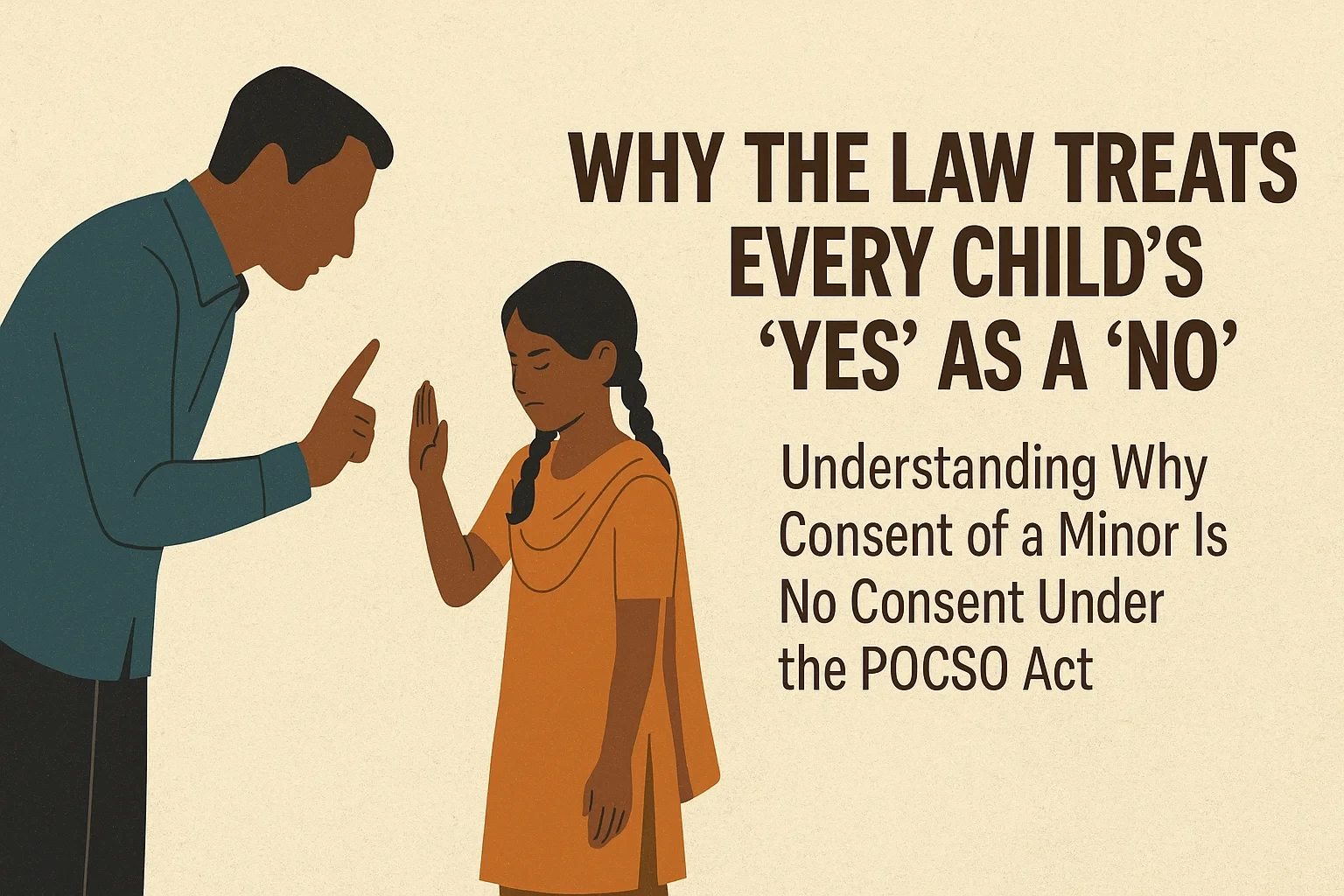
Securing bail under the Protection of Children from Sexual Offences (POCSO) Act, 2012 before the Bombay High Court is one of the most challenging tasks for a defence counsel. Because the Act deals with the protection of minors, courts approach these matters with deep caution.
Under Section 29 and Section 30 of the POCSO Act, there is a legal presumption of guilt against the accused, shifting the initial burden of proof. To successfully secure bail, a defence strategy must be meticulously drafted around critical legal precedents, evidentiary gaps, and the specific facts of the case.
1. The Strategy of "Consensual Romantic Relationships" (Romeo + Juliet: The Elopement Cases)
A significant number of POCSO cases before the Bombay High Court involve teenage elopements or romantic relationships where the "victim" is a minor (typically between 14 to 17 years old) and the accused is a young adult.
Defence Focus
- ▸Knowledge and Capacity: Argue that the minor had sufficient intellectual capacity and maturity to understand the full import of her actions (e.g., travelling long distances voluntarily, staying together for multiple days without coercion).
- ▸Absence of Violence / Force: Highlight if the medical report and the minor's own Section 183 BNSS statement show no signs of physical struggle, restraint, or assault.
- ▸Preventing Criminalisation of Youth: Cite the established stance of the Bombay High Court that the POCSO Act was enacted to protect children from sexual predators, not to penalise young individuals in romantic relationships as hardened criminals.
Key Bombay High Court Precedent
In Imran Iqbal Shaikh v. State of Maharashtra (2023) and confirmed in Vijay Chand Dubey v. State of Maharashtra (2025), the Court explicitly noted that the stringent provisions of the POCSO Act should not be misapplied to punish minors / young adults in consensual romantic relationships, as doing so defeats the true legislative intent of the Act.
2. Evidentiary Discrepancies & Delay in FIR
Because direct evidence in these cases is usually heavily weighted toward the victim's statement, a strong strategy relies on dismantling the prosecution's timeline and consistency.
Defence Focus
- ▸Unexplained Delay in FIR: A massive gap between the date of the alleged incident and the filing of the FIR, without a reasonable explanation, can point toward an afterthought, familial pressure, or false implication.
- ▸Contradictions in Statements: Carefully contrast the initial statement given by the victim to the police (Section 180 BNSS) with the statement recorded before the Magistrate (Section 183 BNSS). Material improvements or shifting narratives weaken the prima facie case.
- ▸Negative Medical & FSL Reports: If the medical examination or the Forensic Science Laboratory (FSL) report shows an absence of physical or DNA evidence linking the accused to the crime, emphasise that the severe charges (like Penetrative Sexual Assault under Section 4 or 6) are legally unsustainable at a prima facie stage.
3. The "Intention to Marry" & Social Realities
In complex socio-economic realities within India, many families arrange marriages involving minors due to societal or financial pressures. When such cases trigger a POCSO FIR (often due to medical intervention or pregnancy), the High Court takes a nuanced view.
Defence Focus
- ▸No Objection from the Family: If the victim's parents or family have entered into an affidavit or statement expressing that they do not object to bail because there is an active engagement or intent to formalise a legal marriage upon the minor attaining majority.
- ▸Strict Conditional Bail: Propose strict conditions — such as the accused maintaining complete physical distance and refraining from any physical relationship with the victim until they are legally married under the law.
Key Bombay High Court Precedent
In Satish Eknath Kakade v. State of Maharashtra (2024), the Aurangabad Bench of the Bombay High Court granted bail to an accused where the families had arranged a marriage due to complex social realities, imposing a strict condition to abstain from a physical relationship until they reached legal marriageable age.
4. Prolonged Pre-Trial Incarceration & Delay in Trial
Article 21 of the Constitution of India guarantees the right to a speedy trial. If the trial is delayed through no fault of the accused, the High Court becomes highly receptive to bail applications.
Defence Focus
- ▸Overcrowded Dockets: Demonstrate that the Special POCSO Court has a heavy backlog and the trial is unlikely to conclude anytime soon.
- ▸No Progress Post-Charge Sheet: Once the charge sheet is filed, the investigation is complete, meaning the accused is no longer required for custodial interrogation.
- ▸The "Jail vs. Bail" Principle: Argue that keeping a young undertrial in custody indefinitely without a trial forces them into the company of hardened criminals, which ruins their future and violates their fundamental liberty.
AEQUITAS LEGIS ASSOCIATES | Advocates & Solicitors | Pune | Mumbai | Delhi
This article is prepared for general informational purposes only and does not constitute legal advice or a legal opinion on any specific matter. Readers should seek independent advice from qualified counsel before acting on any of the matters discussed.